This is the fourteenth in a series of farm reports from our own Tom Hirschfeld, complete with recipes, cooking and gardening tips, and wisdom dispensed.
This week: Tom hunts the perfect American persimmon.
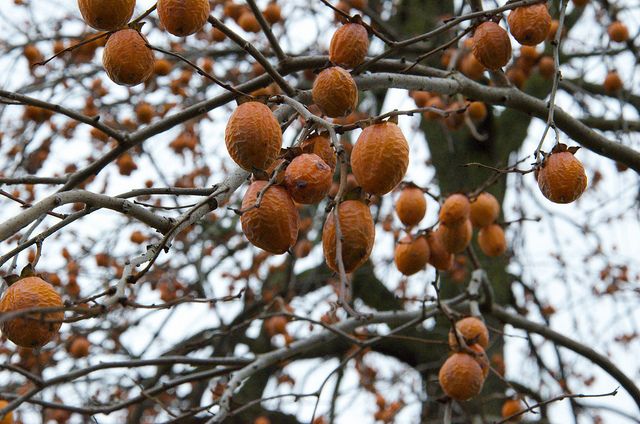
True berries and obsession
I am a flatlander.
You see in Indiana the northern two thirds of the state is flat, while the southern third becomes the foothills to the Appalachians. It all happened when the glaciers rolled through, which was sort of like pushing a sofa on a Persian rug. The rug in front of the sofa bunches up while everything behind becomes flat. The verity of this occurrence is the hills of southern Indiana are beautifully Rubenesque.
It’s an affair really. And not in a Victorian sense either, because it is more gaudy than that.
It is when I smell the musky fall dirt of the southern hills, corseted with orange and yellow leaves and the hickories and sycamores that once held them -- now bare-shouldered -- become the steel boning that holds the hollers to their unique hourglass shape, that I become incorrigible. All because this voluptuous landscape is the Indiana home to the American persimmon, Eve’s apple to me, a temptress of pudding, pie, bread and fudge.
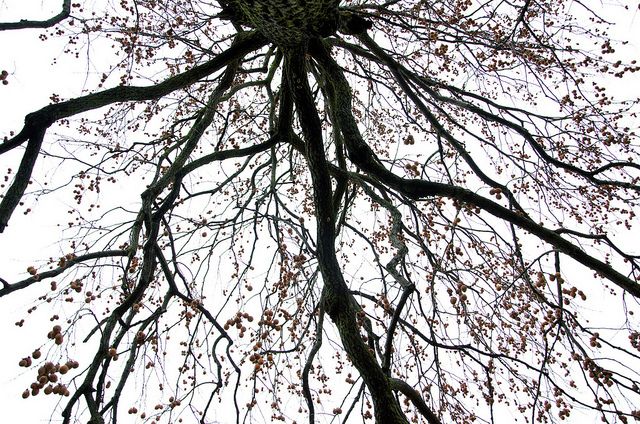
Oh the persimmon has her foreign counterparts, Hachiya and Fuyu, and of course they are succulent, trim, and have that hot little accent, but the American persimmon is one of a kind, sort of the saw blade painted with a kountry landscape, kitsch, and probably more closely related to running off with the circus than a fine dining car on the Orient Express.
It's not like there aren’t persimmon trees in other parts of the state. My neighbor has a beauty, in fact I covet it. It is tall and gorgeous, maybe one of the largest I have seen, but it isn’t the same. In southern Indiana it is the culture that goes along with the persimmon. It's the paw paws, maple syrup, grits, ham and beans, and fried biscuits with apple butter. It's possum and sweet potato dinners and wood-burning stoves. It's all the things I hated about Indiana growing up but am intensely intrigued by now, albeit in a driving by a fatal crash sort of way.
All fatality aside, a good persimmon dessert will leave you in a drool sleep on the couch dreaming the dream of possum and raccoons. Of beating them to the little tannic and orange fires of Zeus, a rare true berry, pulpy and sweet when they finally become ripe enough to eat rather then their typical docket of pucker and gag.
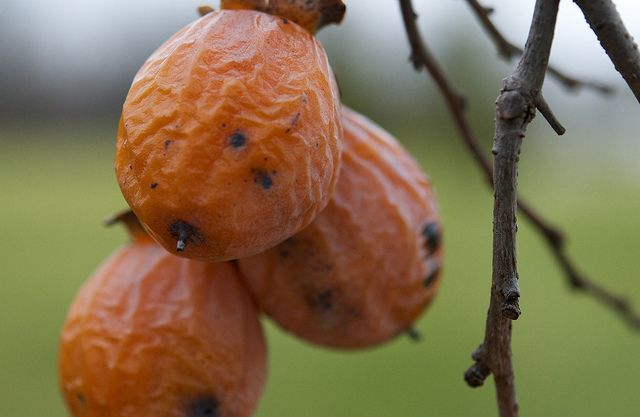
The persimmon likes to flimflam you. It may look ripe and mushy, but when you bite into one it grabs you by the uvula and pulls. It doesn’t let go either, truthfully, it holds on like a spring leech after a bloodless winter.
It is an accomplishment worthy of a diploma, this gathering of the ripe fruits, because somehow the animals know too, just like they know the night the sweet corn is ready, and if you went out to that persimmon tree on that night, the night they know, you might find it is like a barrel full of monkeys. A tree full of nocturnal varmints having a hoedown, all drunk and giddy on your persimmons.
You are thinking of fighting them for it, a barroom brawl, but instead you turn and walk back home, you walk back home because you realize she is a good mistress, the persimmon, and is not exclusive but whimsical, indeed, the very trait that keeps you coming back to her.
Tom's Persimmon Tips
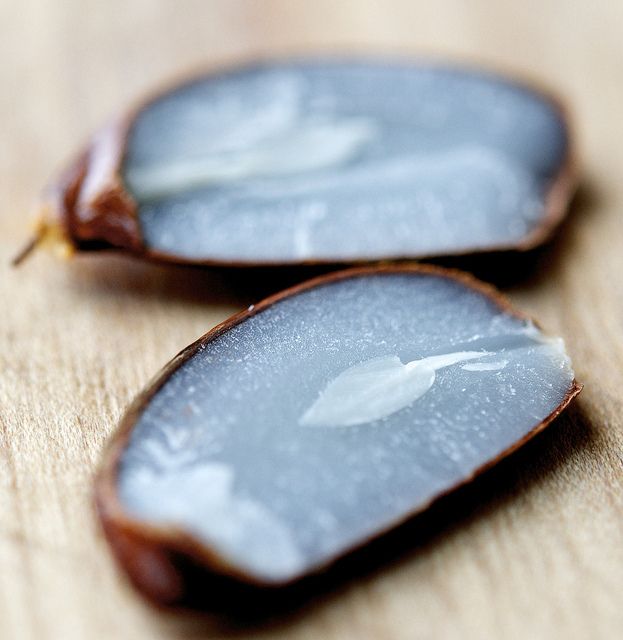
1. Cut a persimmon seed in half lengthwise and you can predict, so folklore says, the winter weather. A spoon shape, like what is pictured, means you will be digging out of the snow. This seed from the neighbors' tree is telling me to have my shovel and the plow at the ready this year. A fork means a mild winter and knife means an icy and cold winter.
2. I usually just collect the whole and intact fruits that are on the ground. Some people go so far as to put a tarp around the tree so it catches them and then they are easily gathered.
3. If you pick one from the tree and taste it, you will gag, cough, and maybe even throw up. They are that tannic.
4. The aroma of ripe persimmons is like nothing else, it is dates, orange, and whiskey.
5. If you decide to pulp them yourself, remember if you put dirty persimmon pulp stuff in the dishwasher you are creating a nightmare of pulpy glue. Don’t do it, wash everything by hand.
6. Do not let any seeds get into your disposal -- they will burn in up in a heartbeat.
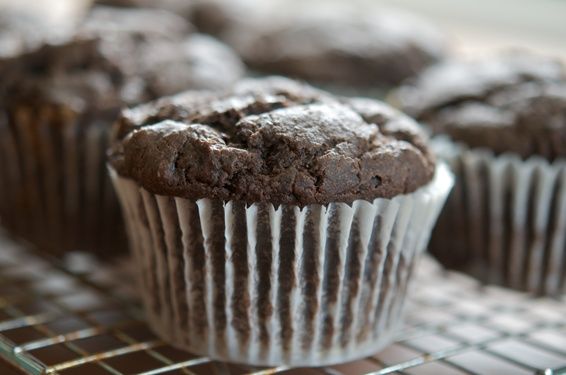
Chocolate Persimmon Muffins
Serves 12
1 pound American persimmon pulp, or Hachiya pulp
6 tablespoons unsalted butter
1/2 cup light brown sugar
2 large eggs
1/2 cup buttermilk or plain yogurt
1 cup buckwheat flour
1 1/2 cup AP flour
1/4 cup plus 2 tablespoons cocoa powder
2 teaspoons baking powder
1/2 teaspoon baking soda
4 ounces bittersweet chocolate
See the full recipe (and save and print it) here.
Want more Tom? See last week's dispatch: Pheasant Hunting and Pot Pie

Written by: thirschfeld
Popular on Food52
10 Comments




See what other Food52 readers are saying.