Every week, a DIY expert spares us a trip to the grocery store and shows us how to make small batches of great foods at home.
In today's Small Batch, Alexandra Stafford of Alexandra Cooks shares her recipe for quince membrillo.
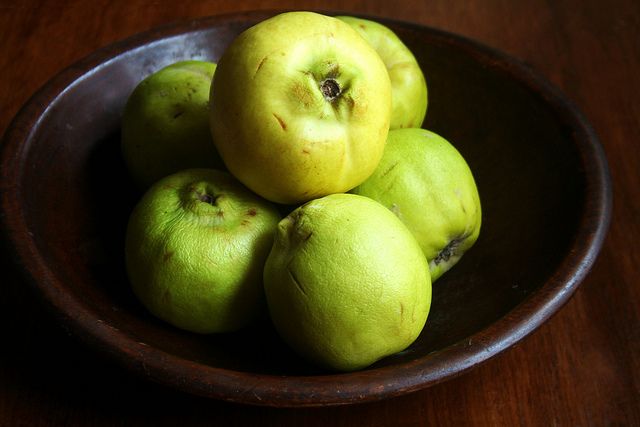
Knobby, pale green, unpalatable — a quince, in its raw state, is perhaps best suited as the subject of still life oil paintings. But its history is rich: Paris awarded Aphrodite a quince, a gesture that incited the Trojan war; the ancient Greeks, who equated the golden fruit with love, marriage and fertility, ritually offered quince at weddings. And the properties of the fruit are enchanting: when cooked, the flesh of the quince transforms from white to a glorious rose and the once astringent taste becomes sweet and floral.

My first cooking experience with quince — a batch of membrillo, a paste often served on cheese plates paired with manchego — had me transfixed. As soon as the quince pieces began simmering in water, an alluring citrusy aroma filled the air. And after watching the simmered and puréed quince cook down slowly with sugar, thickening with every passing minute — the high amount of pectin working to transform the mixture into a thick, bubbling mass — I was addicted.
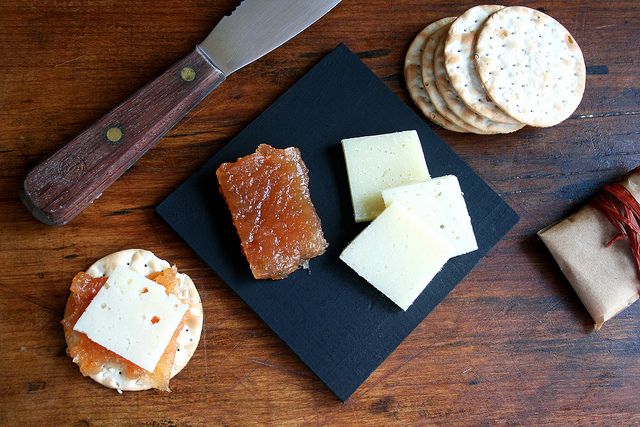
When I see a bowl of quince on my kitchen table, the scent perfuming my entire house, I know the holidays have arrived and with them a favorite tradition. About this time of year every year, I find a half-dozen or so quince — even when it means, which it most often does, breaking my buy-local practices — and make a large batch of membrillo to serve on cheese plates all winter long. Wrapped in parchment and paired with a few wedges of various cheeses, membrillo makes a lovely gift, too. Making membrillo is like making bread or soufflé or caramels — when it works, you’re hooked, the dramatic transformation inspiring you to experiment more. If you’ve never given this most unsuspecting fruit a chance, 'tis the season. It won’t take long to see why it is considered the fruit of the gods.
A few notes:
• Quince can be found at Asian markets, markets like Whole Foods (if you’re lucky), your local farmers market, and if you’re luckier, a neighbor’s backyard.
• Don’t limit the cheese spread to just Manchego — membrillo pairs nicely with so many cheeses: Zamorano, Roncal, Idiazabal, Blue de Basque, Monte Enebro, Garrotxa, Petit Basque, La Serena, to name a few.
Quince Membrillo
Makes 1/2 Sheet Pan
6 quince
1 lemon
3 cups sugar
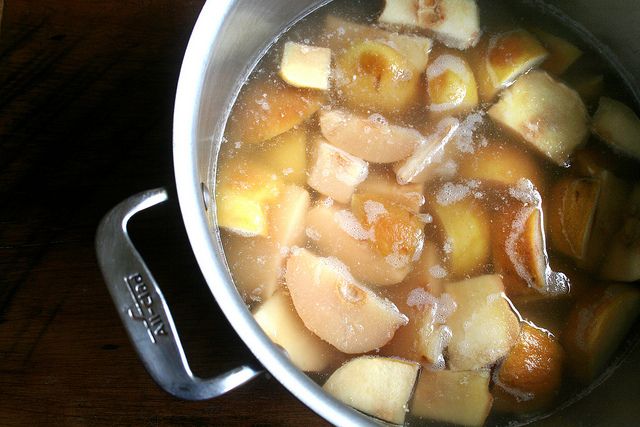
Wash quinces and remove any stickers, fuzz or leaves. Cut straight down around the core to remove the flesh, then cut into big chunks and discard the core. Place quince pieces in a large pot and cover with about 6 cups water. Cut lemon in half and juice into pot. Gently simmer until the pieces are very tender, about 1½ hours. Note: if water boils off so that the quince are not submerged, add enough water to cover the quinces and bring back up to a simmer.
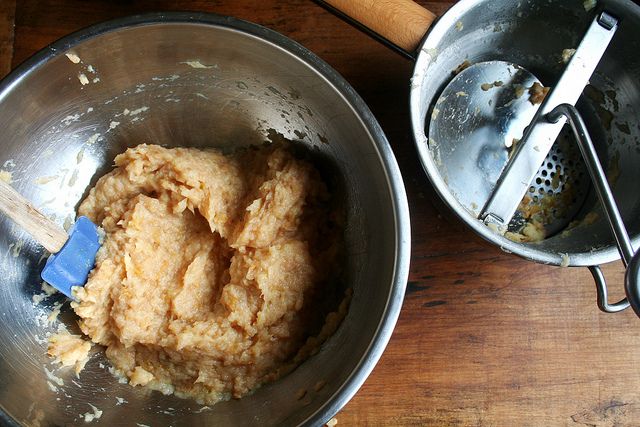
Drain the quince pieces. Pass through a food mill. If you don't have a food mill, purée in a food processor. You should have about 3 cups of purée. While you don't have to, it's helpful to measure the amount of purée you end up with as you want to add an equal amount of sugar in the next step.
Transfer purée to a large non-stick sauté pan. Add about 3 cups of sugar (depending on the amount of purée you measured) and cook over low heat, stirring frequently for about an hour. If you get impatient, it's OK to turn the heat up to medium, but keep a close watch on it and stir frequently. The mixture will thicken and will be rosy in color. It will start bubbling almost as a complete mass and will be shiny when done.
Line a sheet pan with parchment paper. (It's helpful to use clips of some sort to secure the parchment to the sheet pan.) Spread the quince paste so that it is about a half-inch thick. Smooth with a spatula and try to form into an even rectangle—it most likely will not cover the whole surface area of the pan. Set aside to cool completely.
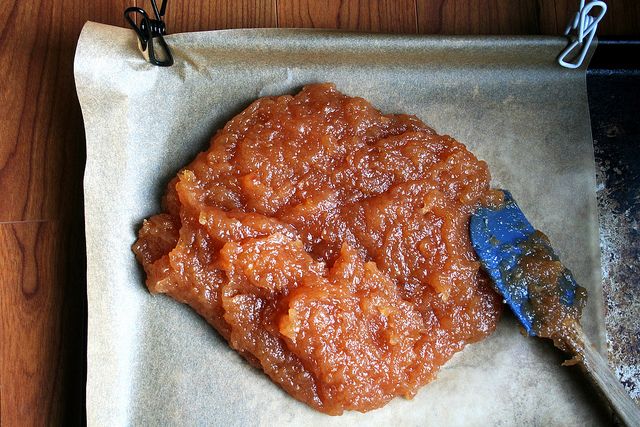
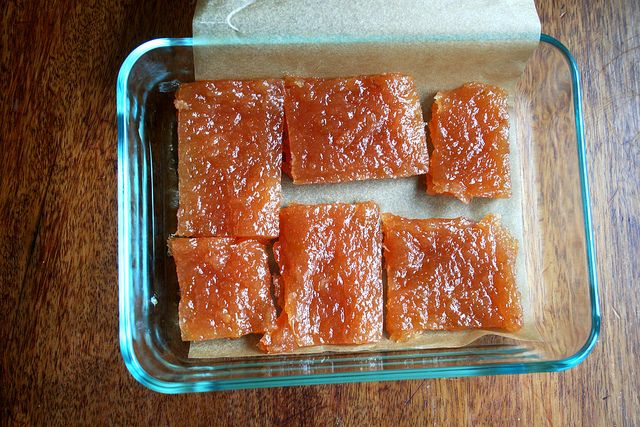
When cool, transfer parchment paper-filled membrillo to a large cutting board. Fill a large vase or cup with hot water and have a clean towel by your side. Line a glass storage vessel with parchment paper. Cut membrillo into 2 x 4-inch pieces approximately, dipping the knife into the hot water and drying it off as necessary. Fill one layer of the storage vessel with cut membrillo, top with another layer of parchment and continue filling in this manner until all of the membrillo is cut. Store in the refrigerator for months. Bring to room temperature before serving.
Save and print the recipe here.
Photos by Alexandra Stafford

Written by: Alexandra Stafford
Popular on Food52
24 Comments

I've never kept it long enough to go bad.
PS the longer and slower you cook it, the deeper the color will become and the flavor also -- it will get ruby red. I usually have mine cooking over low heat, or in the oven at around 220F, for several hours.




See what other Food52 readers are saying.