Every week, Food52's Senior Editor Kristen Miglore is unearthing recipes that are nothing short of genius.
Today: The simplest possible technique for a succulent turkey. It will forgive you if you overcook it. You can do it while you're defrosting the bird, if you so choose. And best of all, it tastes like turkey.
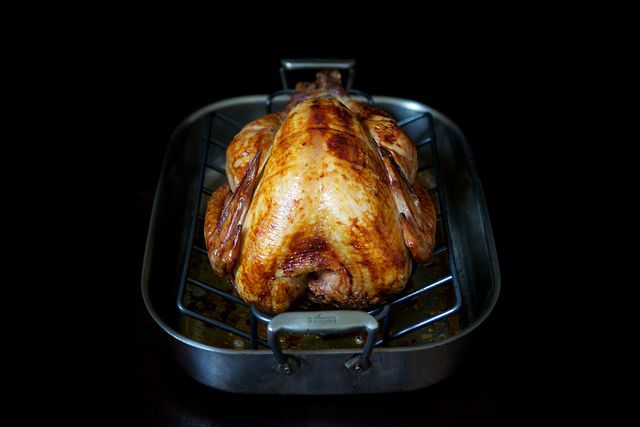
- Kristen
Five years ago, the L.A. Times Food Section held a turkey taste test that changed the way they (and a lot of others) talk about Thanksgiving.
Under the vigilant eye of Russ Parsons -- longtime Food Editor at the paper and author of How to Read a French Fry -- four birds came to the table, and a simple new technique had the panel smitten.
The bird had been dry-brined (though the term "dry-brining" wasn't being tossed around much yet). In less-fancy words, a few tablespoons of salt had been sprinkled on it a few days ahead.
Because of this, the turkey was well-seasoned through and through, and had all the juiciness of your average wet-brined turkey, without its sometimes off-putting texture (we'll come back to that later). It tasted like turkey, but turkey having a very good day.
Parsons has written about the salting technique every Thanksgiving since, testing new variations each year and slashing steps he decides aren't important. The response has been glowing. By his count, he's received over 1,000 emails from happy cooks, and some of the most genius hacks have come from their suggestions.
So where had this turkey been all our lives? To find out, I had to get the story from the two clever cooks we have to thank for the recipe: one an editor, the other a chef. Without both parties, the world might never have known the wonder that is the Judy Bird.


Here's how it all went down:
Since the late 1980s, Judy Rodgers (you remember Judy) has dry-brined the famous roast chicken -- and just about everything else -- at Zuni Café in San Francisco. She learned the technique while cooking in Southwestern France and perfected it back in the States, meticulously trying it on everything from fish fillets to hamburgers to roasts, even some vegetables -- but never a turkey.
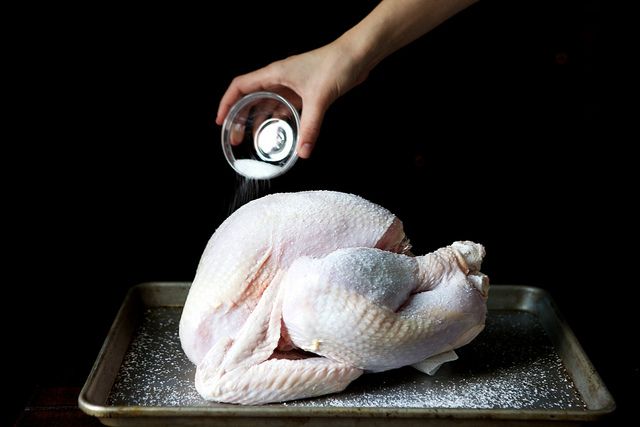
Salting early doesn't dry these things out -- if timed and measured right, moisture is pulled out and back in again, and the process magically realigns the proteins so that they'll hold on tighter next time. For a much more scientific explanation, see Rodgers or McGee. But I can tell you what this means to your mouth: juicy, tender food. As a bonus, it's salted all the way to its middle, not just on the surface.
This juice-retaining action is the same as with a wet brine, with one big difference: the wet version also draws in some of the surrounding water and makes everything vaguely ham-like. Juicy yes, and flavorful, but springy and tight in a way that doesn't smack of fresh meat. Not to mention the space concerns: wet brines are greedy things. Not only are you storing something in your fridge for several days, you're storing it in a vat of liquid.
Enter Parsons, circa 2006, who had quizzed Rodgers on her relationship with salt for various stories over the years. "I was casting about for Thanksgiving ideas and I wondered if something that worked for chicken might work for turkey." Parsons wrote to me in an email, "I called her and asked if she’s ever tried it and she said no."
In fact, Rodgers had recommended a wet brine for turkey in the Zuni Café Cookbook in 2002, a recipe she's been using on pork chops since her days at Chez Panisse in the 1980s and had scaled up successfully for the big unwieldy bird. Though she has dry-brined plenty of geese and ducks (and more chickens than probably anyone on earth), the reason she never pursued turkey is simple.
"I'm just not a big turkey, Thanksgiving girl," Rodgers says. "A lot of chefs feel this way. At Zuni we still change the menu every day, and sometimes I taste 75 things in the course of a day, from oysters to desserts. So for me, Thanksgiving is a holiday from cooking and eating. If I don't have to plan a menu, I think, 'It would be really nice to just scramble some eggs'."
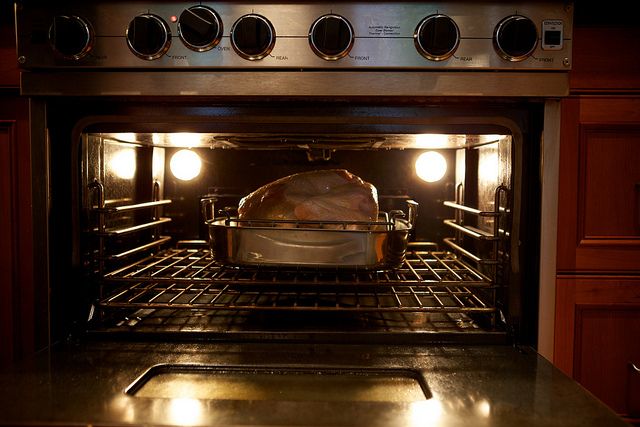
So Rodgers consulted and Parsons (a serious turkey fan) got testing. "I tried it first with a 12-pounder and it worked great. Then I worked my way up," Parsons wrote. "When I talked to Judy, I think she was a little surprised … and maybe a little amused that I was so excited about it. I can get a little geeky."
Geeky like a fox. Since then, he's figured out grilling the brined turkey, and the right herbs and spices to add to the salt -- but his most amazing discovery is that you can brine a frozen bird as it defrosts in your refrigerator. And why wouldn't you?
Once you taste your very own Judy Bird, you can thank them both: the chef who'd rather not think about Thanksgiving at all, and the food editor whose job depends on it.
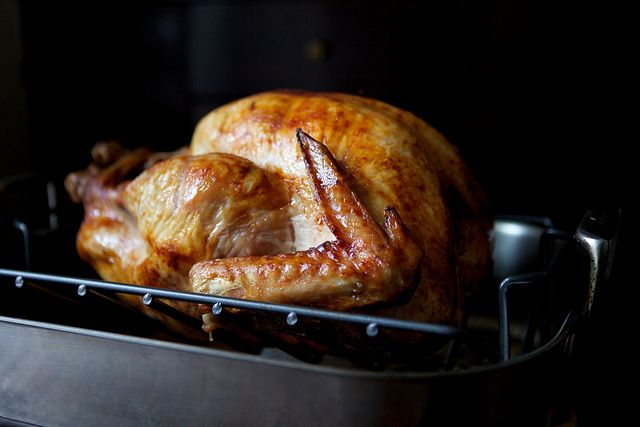
Russ Parsons' Dry-Brined Turkey (a.k.a. The Judy Bird)
Adapted slightly from The L.A. Times Food Section
Serves 11 to 15
One 12- to 16-pound turkey (frozen is fine)
Kosher salt
Herbs and/or spices to flavor the salt (optional -- see suggestions in step 1)
Melted butter for basting (optional)
See a slideshow and the full recipe (and save and print it) here.
Want more genius? TryJudy Rodgers' Roasted Applesauce
Got a genius recipe to share -- from a classic cookbook, an online source, or anywhere, really? Please send it my way (and tell me what's so smart about it) at kristen@food52.com.
Get more of the genius of Russ Parsons, in book form: How to Pick a Peach and How to Read a French Fry
Photos by Nicole Franzen

From our new podcast network, The Genius Recipe Tapes is lifelong Genius hunter Kristen Miglore’s 10-year-strong column in audio form, featuring all the uncut gems from the weekly column and video series. Subscribe on Apple Podcasts, Spotify, or wherever you get your podcasts so you don’t miss out.
Listen & Subscribe
Written by: Kristen Miglore
Popular on Food52
60 Comments


3 years ago, I needed my oven and decided to use my gas grill and I've never looked back; Same temps same directions for flipping the bird, all of it.
I still use an aluminum drip pan under the roasting rack, so drippings are more like fond, but I add white wine or broth as the turkey cooks, and that helps to keep some liquid for gravy. Now my oven is free to bake the Pumpkin Cobbler, or anything else we need to keep warm!


On my Big Green Egg (lightly smoked with apple wood)over a tray with water and two sliced lemons. I cooked an 18 pound turkey in about 3 hours. Pulled it at 165 degrees in the breast and let it rest about two hours before dinner. I might of had 5 tbsp. of juice in a large turkey tray after cutting it all up after dinner.
It had the texture and moisture that I would hope for in a turkey, almost as good as it gets. I also adapted the regular potato and bread stuffing with some celery root, caramelized onions and dried apricots, which either cook in the oven or the outside Weber at Canadian Thanksgiving.
The good news, two hours to prepare in the morning and then very little effort to make it all come together. I guess practice makes perfect. This is the third turkey I've BBQ'd on the Egg and the fifth one on a bbq overall.
General recommendation, never stuff a turkey, either the stuffing is cooked to a safe temperature and the turkey tastes like shoe leather, or the turkey is cooked to the right temperature and you may get sick. Pull it at 165 F and let it rest as long as you can, 1 hour minimum.
I will be trying this recipe again on the second Monday in October, Canadian Thanksgiving.

One question for next year...it dripped very little juice while roasting, and we didn't think we'd have enough drippings for gravy so we added a little broth to the bottom of the pan maybe half way through...is there something I could/should do differently next year...now that this is my new tradition? :)

See what other Food52 readers are saying.