🔎

The Piglet (2010)
Tournament of Cookbooks

Round Two, 2010

Ratio

Ratio

Michael Ruhlman

Versus
Ratio

Seven Fires

Francis Mallmann with Peter Kaminsky

Ben Leventhal

The Judgement

By Ben Leventhal

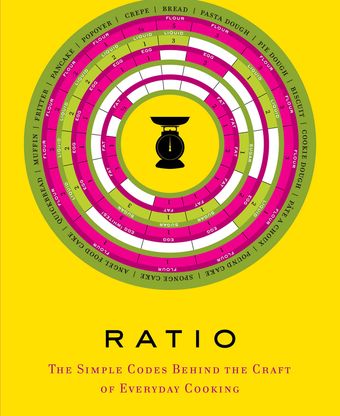
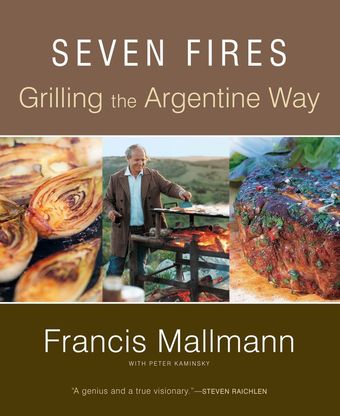
Here, then, we have Michael Ruhlman's Ratio, "The simple codes behind the craft of everyday cooking," versus Francis Mallmann and Peter Kaminsky's Seven Fires, "Grilling the Argentine Way." The higher-ups at food52 have essentially tasked me with the job of comparing science with art. Seven Fires -- art -- is a traditional cookbook insomuch as it has a theme (deep, rustic open fire cooking), a back-story and many specific recipes. Ratio -- science -- is a cook's book, a reference guide to the ratios that govern all recipes (all pasta dough begins with the ratio of 3 parts flour to 2 parts egg, for example). While it does contain actual recipes, they are provided more as exhibits than the basis for cooking.

And by way of intro to this judge, let me acknowledge that I cook infrequently. The site is called Eater, and not Cooker, for a reason. That said, I've enjoyed enough food and endured more than enough terrible food to have taken a keen interest in how the sauce is made.

The battle over these books is an intellectual one. For on its face, there is no contest: Ratio is black and white and all theory, and where it does provide specific recipes, it falters. Seven Fires is not perfect, but even where there was massive user error (on my part), the recipes in this book netted rich, satisfying meals. And, more in the mold of current cookbooks, it is as much a photo archive of Mallmann's cuisine as it is a recipe collection. (In fact, it might be more the former: a recipe for Shrimp with Spaetzle -- excellent, by the way -- calls for peeled and deveined shrimp, yet is pictured using large head-on prawns.)

Where Ruhlman does nail it is in suggesting that the modern cook should take pride in his own imagination and not be boxed into something as specific as Seven Fires. If one has the building blocks, the ratios, then any home chef with a modicum of creativity should be able to elevate those fundamentals to greatness on his or her own. In theory, I agree. I fully embrace the thrill of trial and error and, then, success, and I acknowledge that it is the basis for great cooking.(Although, don't most cooks today, in this post-Child, post-Pepin world, know many of these ratios instinctively?)

The problem is that home cooks have day jobs and don't necessarily have the patience or perseverence to cook, say, 50 batches of bread (5 parts flour, 3 parts water) if after that you'd still have been better off using the Bouchon Bakery recipe as a starting point. Indeed, I look to my cookbooks to save me much of the time and cost burden of trial and error. I am fully comfortable ceding the majority of the creativity to a guy like Mallmann -- or Boulud or Ripert or Keller.

So, verdict time, if the esteemed Ruhlman begins to offer a laminated one-sheet version, I will order up a case of them, for there is inarguably a great value in having every basic recipe at your fingertips. But, because with it on the first try I cooked food that I then thoroughly enjoyed eating, the winner on this day is Seven Fires.

And the winner is…

Seven Fires

Seven Fires

About the Judge

Ben Leventhal

Ben Leventhal

Web entrepreneur Ben Leventhal is the co-founder of Curbed Media, a network of city websites, and the Creator and former Editor-in-Chief of Eater.com, the largest independent restaurant and nightlife blog on the Internet. (And as of yesterday, he announced that he has a fancy new job at NBC -- congrats Ben!) He’s written for publications including the New York Times, New York Magazine, Details, Food & Wine, DailyCandy and Hampton Style, where he served as the restaurant critic. Food & Wine awarded Ben a Tastemaker Award in 2006 and called Eater “required reading.” He has also been featured in the New York Times, Associated Press, San Francisco Chronicle and the LA Times.

From the Booth

Amanda

amanda

I like how Seven Fires manages to be a lifestyle book without trying to be one -- before we know it, everyone will have a chapa in their back yard.

From the Booth

Charlotte

charlotte

Ratio is a How to Cook Everything for a right-brained person, and, I guess, mine has a left-brained way of doing businesss. I appreciate Ratio and respect it. I might even use it to look up a ratio for a pastry or sauce-related-something I was approaching from a wildly (read dangerous) improvisational point of view. Other than that, the book is just an impressive and interesting proposition conceptually, and incredibly well-executed. It has also made me wonder if pastry chefs tend to be more right-brained than their non-pastry counterparts. Probably not.

Comments (5)

Default-small
Default-small
P1020611

over 3 years ago mariaraynal

Not the point of the discussion, I know, but Ruhlman actually did offer posters of the Ratio chart for a short time, and I think you can still print off a one-sheeter off of his site for reference.

Ratio reminds me a bit of Pam Anderson's "How to Cook without a Book." Once you know her "formulas," you can improvise and create a variety of dishes. It seems clinical, but it actually liberates the home cook. On the surface, Ratio doesn't celebrate the art of cooking or baking, but dig deeper and you find it's not just a science book.

Profilepic

over 3 years ago Rivka

Again, we have a situation where the judge doesn't appreciate the premise of one book and thus gives the edge to the other. These books should have been judged by someone who spends his/her time cooking, not just eating.

Default-small

over 3 years ago hungrygrrl

the comparison makes no sense, the two books serve different purposes. It's like comparing chef's clogs and cowboy boots. Neither is inherently "better."

Merrill

over 3 years ago merrill

Merrill is a co-founder of food52.

Yes, these two books are very different, but we intended this tournament to spark a conversation about what makes a great cookbook, no matter the topic/usability. We invited a variety of judges to share their perspectives, and the Piglet is also about celebrating different points of view. It's not a science -- but neither is cooking!

Default-small

over 3 years ago Bunnee

Ratio may be science but it is inspirational and encourages experimentation rather than following someone else's idea of what a dish should be. Use Ratio and The Flavor Bible and you will be a far more creative cook.

Welcome to
The Tournament of Cookbooks!

Inspired by The Morning News' Tournament of Books, we got together with our friend Charlotte Druckman and created the Tournament of Cookbooks. Here on Food52, you can watch the action and weigh in on the results as the 16 most notable cookbooks of the year vie for the coveted Piglet trophy. The tournament features top food writers and chefs as judges. Play will take place over the course of 3 weeks, with a decision published each weekday.

The 2010 Judges

Past Years:
2012: Final Round | Judges | Bracket
2011: Final Round | Judges
2010: Final Round | Judges

The Final Round (2010)

Wildcard Round (2010)

Round Three (2010)

Round Two (2010)

Round One (2010)


How you eat is how you live.
Let's eat well together.

Sign up for our useful and inspiring emails.
Get a $10 credit at Provisions, our new kitchen-and-home shop, launching soon!

Please enter a valid email address.

Well played.
You deserve a cookie.

We'll email your $10 promo code when we launch.